German version
Lolita Lesen in Teheran:
Literatur in dunklen Zeiten
Some books find you at the right moment. I had heard about this memoir years ago, but it was only recently when I saw the poster for the upcoming film adaptation that something clicked. It sparked an idea: to start a small reading circle here in Leipzig, read the book together before the film release, and then watch it as a group.
Nafisi does not simply tell a personal story but she documents what it means to live through history. How ideology enters private life, fear becomes routine, and literature becomes a quiet form of resistance.
The book follows a secret literature class held in Tehran after the Cultural Revolution. Through conversations about Nabokov, Fitzgerald, James and Austen, we see how power manipulates narrative, dreams survive pressure, and dignity becomes an act of defiance.
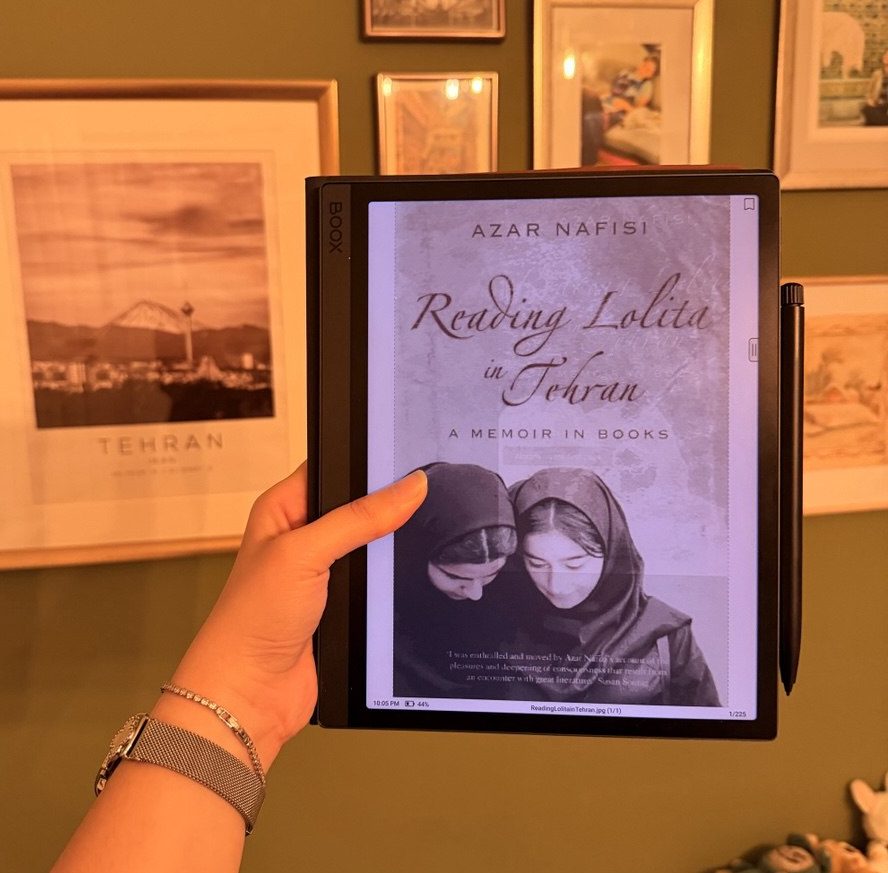
What I especially appreciate is the clever structure of the book. The first two sections are named after characters (Lolita and Gatsby) both trapped in stories written by others, stripped of agency. The last two sections shift to authors (James and Austen) a symbolic reclaiming of narrative and voice. This movement from character to creator mirrors the journey of Nafisi’s students: from being defined by external forces to slowly defining themselves.
At times, the narrative leans toward a Western gaze, and some portrayals of Iran feel simplified. But emotional honesty matters more to me than ideological precision. It captures something painfully universal: the struggle for individuality under pressure, the resilience of women, and the role of books in protecting inner freedom.
Recommended if you enjoy reflective memoirs, literature about literature, and stories of quiet courage.